
Triaxial Testing
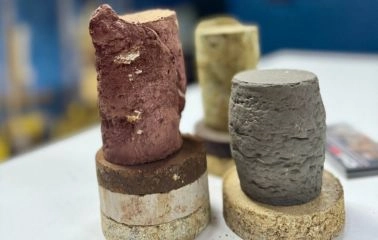
Precision Soil Strength Analysis for Safe and Sustainable Design
Triaxial testing is a cornerstone of geotechnical engineering, providing critical insights into the shear strength and deformation characteristics of soils under controlled stress conditions.
By simulating in-situ stress environments, this method enables engineers to design foundations, slopes, and earth-retaining structures with enhanced safety and reliability.
Testing Procedure
A cylindrical soil specimen is encased in a rubber membrane and placed within a triaxial chamber. Confining pressure is applied uniformly around the specimen, while axial stress is incrementally increased until failure occurs. This process allows for the assessment of soil behaviour under various loading and drainage conditions.
Types of Triaxial Tests
- Unconsolidated Undrained (UU): Quick assessment without allowing drainage or consolidation, suitable for short-term stability analysis.
- Consolidated Undrained (CU): Specimen is consolidated under confining pressure, then sheared without drainage, measuring pore water pressures.
- Consolidated Drained (CD): Specimen is consolidated and sheared with drainage permitted, ideal for long-term stability evaluations.
Types of Triaxial Tests
- Unconsolidated Undrained (UU): Quick assessment without allowing drainage or consolidation, suitable for short-term stability analysis.
- Consolidated Undrained (CU): Specimen is consolidated under confining pressure, then sheared without drainage, measuring pore water pressures.
- Consolidated Drained (CD): Specimen is consolidated and sheared with drainage permitted, ideal for long-term stability evaluations.
Key Parameters Measured
- Shear Strength (τ): Determines the soil’s resistance to shear stress.
- Cohesion (c) and Friction Angle (φ): Essential for slope stability and foundation design.
- Pore Water Pressure (u): Critical for understanding drainage and consolidation behaviour.
- Stress-Strain Relationships: Provides data on soil deformation characteristics
Applications
- Foundation Design: Assess bearing capacity and settlement potential.
- Slope Stability: Evaluate the risk of landslides and the design of embankments.
- Retaining Structures: Design of retaining walls and earth support systems.
- Earthquake Engineering: Analyse soil response to seismic loading
Advantages
- Simulates real-world stress conditions for accurate analysis.
- Applicable to a wide range of soil types and conditions.
- Provides comprehensive data for informed engineering decisions
Conclusion
Triaxial testing is an indispensable tool in geotechnical engineering, offering detailed insights into soil behaviour under various stress conditions. Its application ensures the design and construction of safe, efficient, and sustainable infrastructure.