
Aggregate Testing
Aggregate Testing
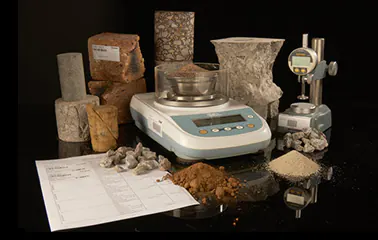
Civilab (Pty) Ltd, a leading civil and mining engineering laboratory in South Africa, offers comprehensive aggregate testing services to ensure the quality and durability of construction materials.These services are crucial for projects such as road construction, bridges, and large-scale infrastructure developments.
Aggregate tests are a range of laboratory procedures used to evaluate the’ quality, durability, and suitability of aggregates for construction purposes. These tests determine various properties, including strength, resistance to wear and tear, and particle size distribution, ensuring that the aggregates meet the requirements for the intended application.
Aggregate Testing Services at Civilab
Determines particle size distribution to ensure proper compaction and strength.
Measures the resistance of aggregates to crushing under a gradually applied load.
Assesses the aggregate's resistance to crushing under a specified load.
Evaluates the shape of aggregate particles, identifying the percentage of flaky particles.
Measures the average minimum dimension of aggregate particles.
Determines the mass of aggregate per unit volume, both loose and compacted.
Calculates the density of aggregate particles excluding pores.
Assesses the amount of water required for a given workability.
Measures the increase in volume of fine aggregates when moist.
Evaluates the aggregate's resistance to weathering.
Detects the presence of organic materials that may affect concrete strength.
Assesses potential volume changes in concrete due to aggregate properties.
Identifies harmful substances that may affect concrete durability.
Aggregate Testing Equipment
Measures the crushing resistance of aggregates.
Used for particle size distribution analysis.
Assess the shape characteristics of aggregate particles.
Determines the density of aggregates.
Used for washing fine aggregates to remove impurities.
Mobile and On-Site Testing Services
Frequently Asked Questions
- What is aggregate testing, and why is it important in road construction?
Aggregate testing involves evaluating aggregates’ physical and mechanical properties to ensure they meet the required standards for construction projects. In road construction, proper aggregate testing ensures pavement durability, strength, and longevity by verifying that the materials can withstand traffic loads and environmental conditions.
- What is the significance of the Aggregate Crushing Value (ACV) test?
The ACV test provides a relative measure of an aggregate’s resistance to crushing under a gradually applied compressive load. A lower ACV indicates a stronger aggregate, which is desirable for high-load-bearing applications like road bases and pavements.
- Why are Flakiness and Elongation Index tests important?
These tests determine the shape characteristics of aggregates. Aggregates with high percentages of flaky or elongated particles may lead to poor compaction and reduced pavement strength. Ensuring aggregates have a suitable shape contributes to the stability and durability of road structures.
- How is Sieve Analysis conducted, and why is it essential?
Sieve Analysis involves passing aggregates through a series of sieves with different mesh sizes to determine the particle size distribution. Proper grading ensures optimal compaction and strength of the pavement. This test helps in designing aggregate blends that meet specific construction requirements.
- What are the key tests performed on aggregates for road construction?
Some essential aggregate tests include:
- Aggregate Crushing Value (ACV) Test: Assesses the resistance of aggregates to crushing under a gradually applied compressive load
- Los Angeles Abrasion Test: Determines aggregates’ hardness and abrasion resistance.
- Aggregate Impact Value (AIV) Test: Measures aggregates’ toughness and resistance to sudden impacts.
- Flakiness and Elongation Index Tests: Evaluate the shape characteristics of aggregates, identifying the percentage of flaky and elongated particles.
- Specific Gravity and Water Absorption Tests: These tests determine the density and porosity of aggregates, which affect strength and durability.
- Soundness Test: Assesses the resistance of aggregates to weathering and disintegration.
- Sieve Analysis (Gradation Test): Analyses the particle size distribution of aggregates to ensure proper grading.
- How does the Los Angeles Abrasion Test work, and what does it indicate?
The Los Angeles Abrasion Test measures aggregate hardness and abrasion resistance. In this test, aggregates are placed in a rotating drum with steel balls, simulating the wear and tear they undergo in actual road conditions. The percentage of wear is calculated to assess the aggregate’s suitability for road construction.
- What does the Specific Gravity and Water Absorption test reveal about aggregates?
This test determines aggregates’ density (specific gravity) and porosity (water absorption). Aggregates with high water absorption may be more porous and less durable, potentially affecting the strength and longevity of the pavement.
- What are the standard limits for aggregate tests in road construction?
Standard limits can vary based on regional guidelines, but generally:
- ACV: Should not exceed 30% for road surfaces.
- Los Angeles Abrasion Value: Typically,it should be less than 35% for surface courses and 45% for base courses.
- Water Absorption: Should be below 2% for most construction purposes.
Consult local standards and specifications for precise requirements, or reach us at info@civilab.co.za for assistance.
Why Choose Civilab for Aggregate Testing?
Civilab is recognised as one of Africa’s leading testing laboratories. It has substantial experience in aggregate test services gained through decades of participation in major construction and civil engineering projects.
Our project and contract managers ensure efficient communication throughout every project and ensure maximum data acquisition whilst minimising costs.
Civilab (Pty) Ltd is an ISO 17025-certified laboratory that holds a SANAS Accreditation certificate for selected tests.